A conceptual medical app exploring intuitive UX/UI design for monitoring and regulating enteral feeding pump systems.
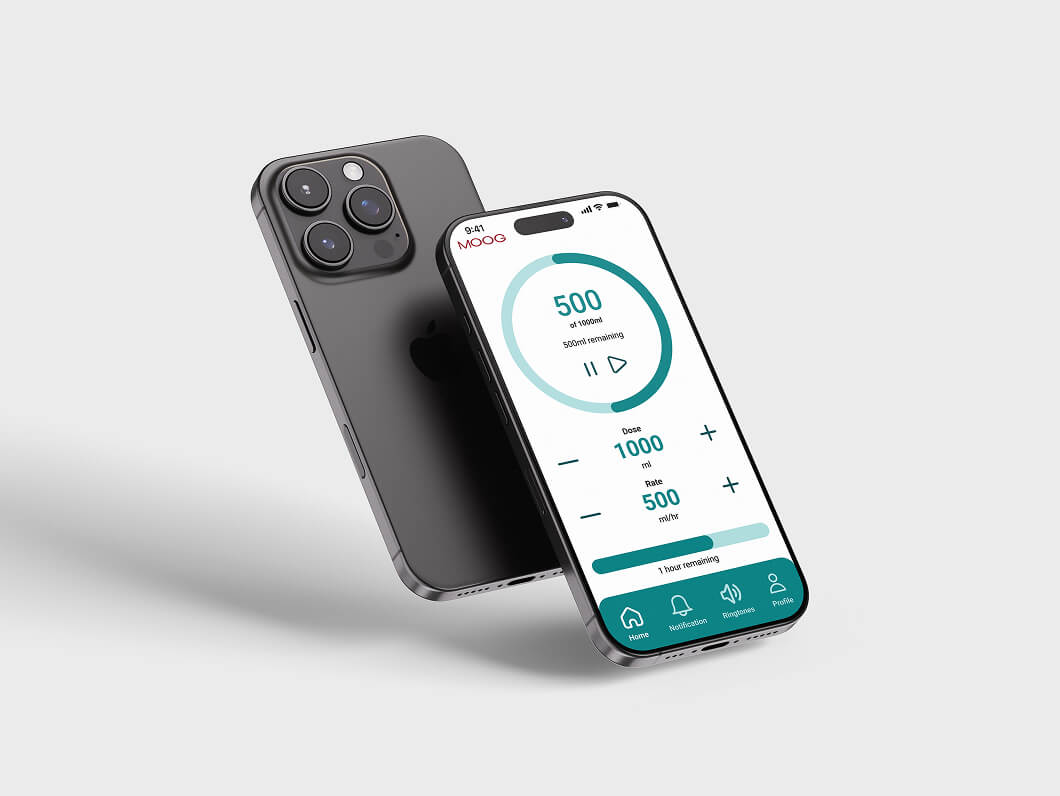
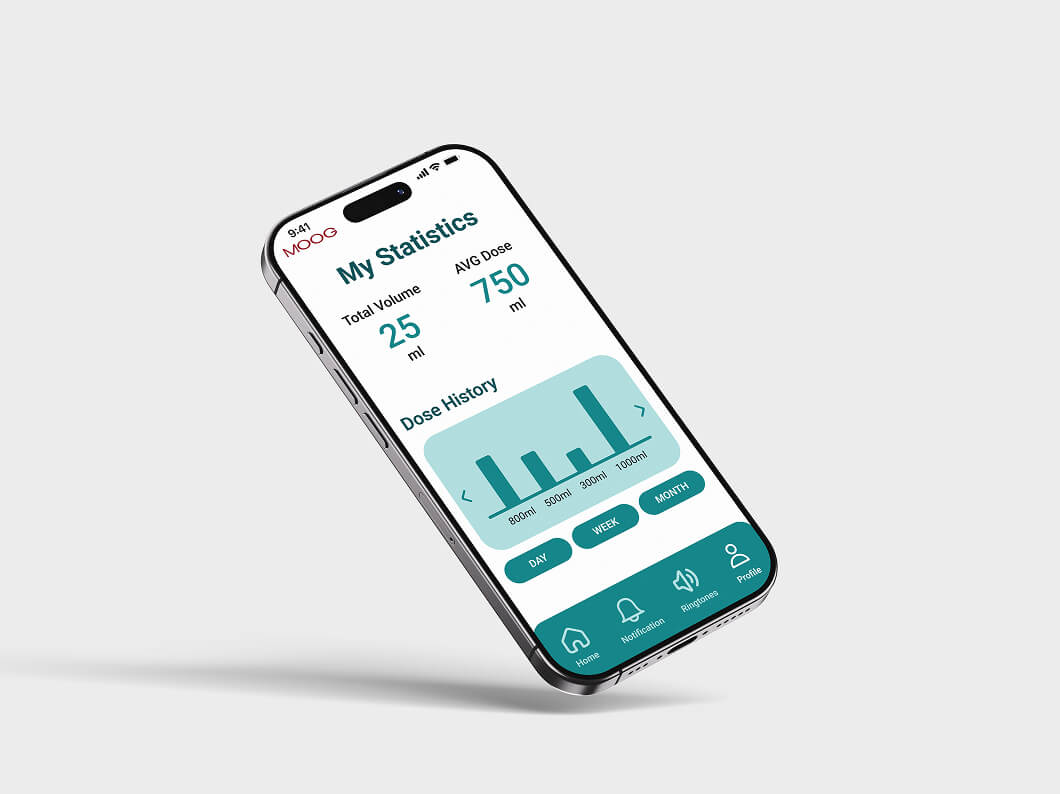
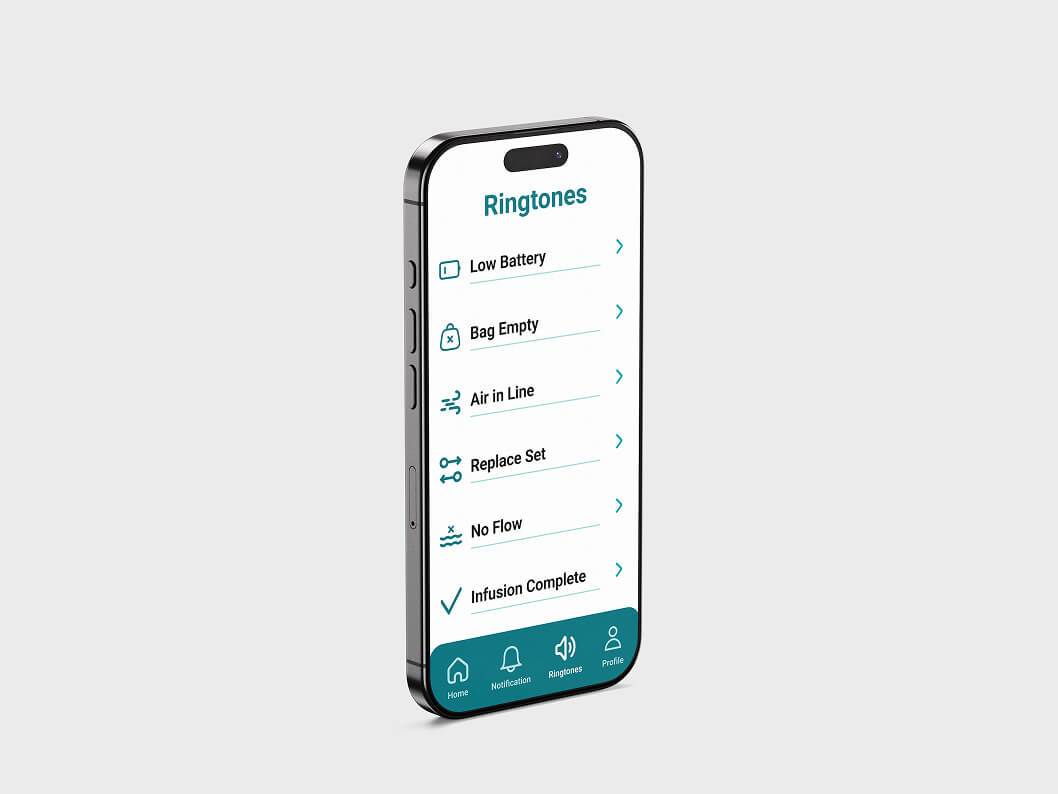
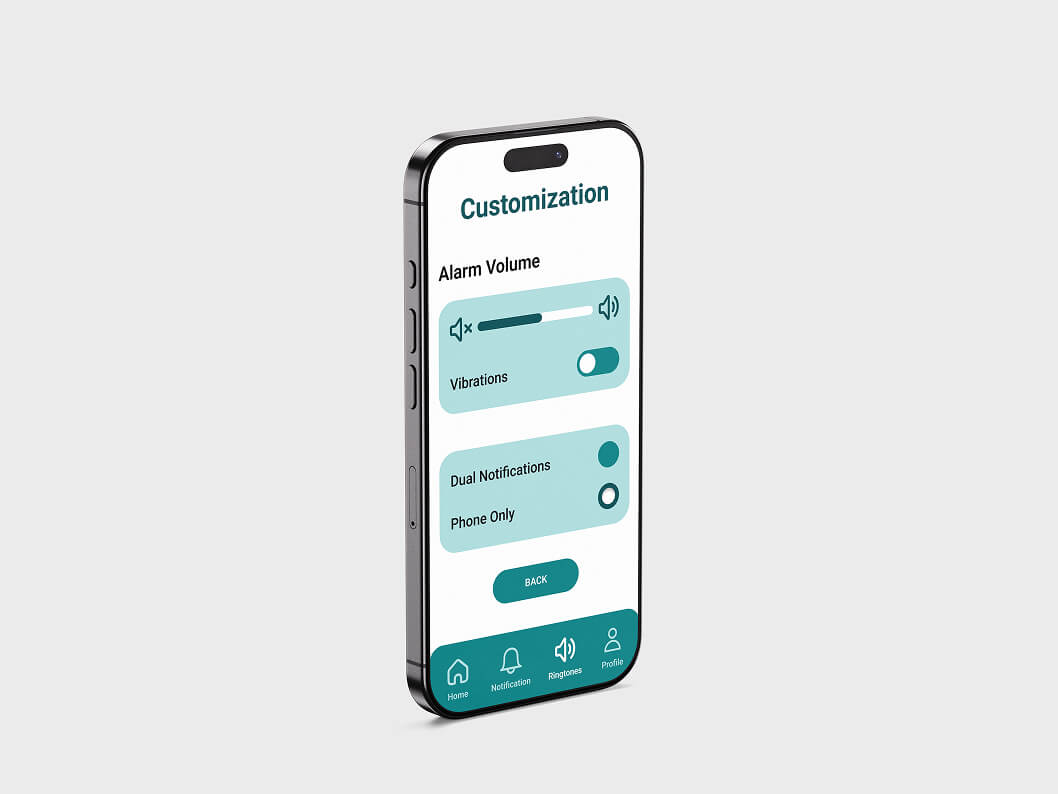
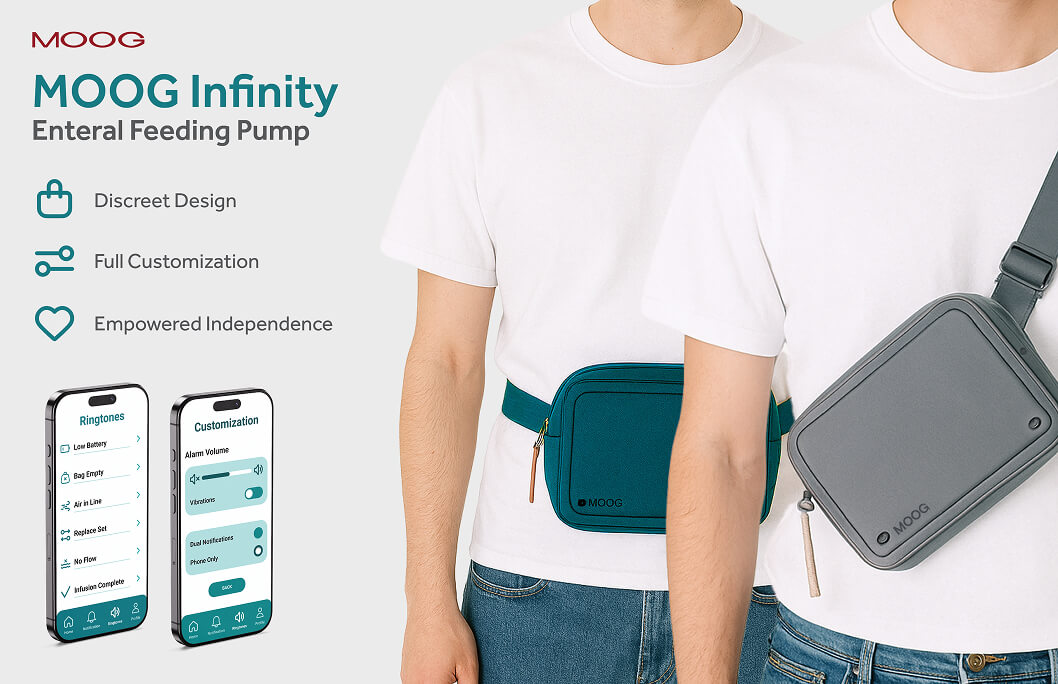
MOOG is a conceptual app and wearable project designed to simplify and support enteral feeding for users. The wearable device was redesigned as a fashionable fanny bag to provide privacy and ease of use in daily life. The accompanying app allows users to set feeding dosage and rate, adjust notifications, and monitor the device in real time. By combining thoughtful hardware design with a clear, intuitive app interface, MOOG ensures proper nutrition care in a discreet and accessible way.
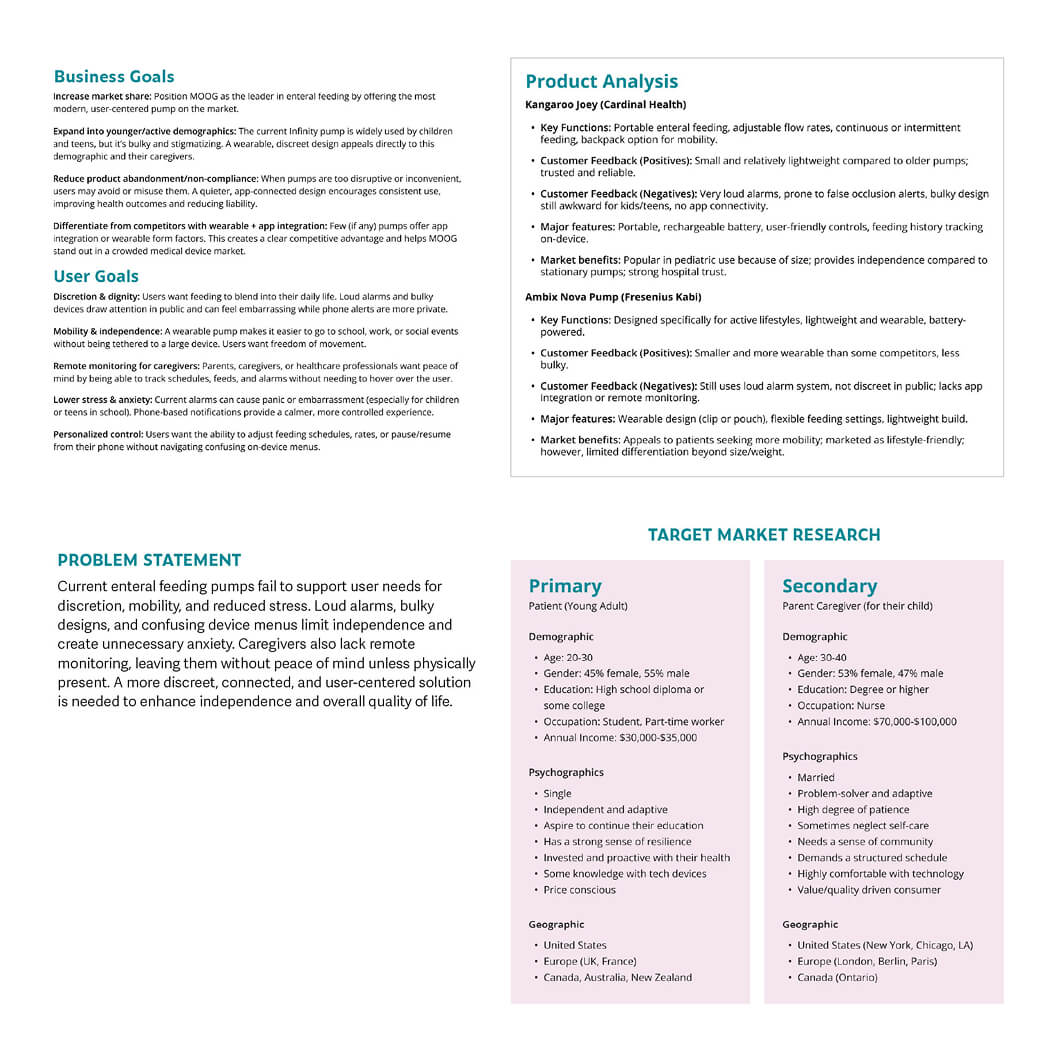
The research phase for MOOG focused on understanding the needs of enteral feeding users and caregivers, as well as the challenges associated with managing feeding pumps in everyday life. Existing enteral feeding devices were analyzed to identify gaps in usability, discretion, and user experience. Business goals and user objectives were considered to balance safety, reliability, and ease of use. These insights informed design decisions aimed at creating a solution that simplifies care while supporting privacy and dignity for users.
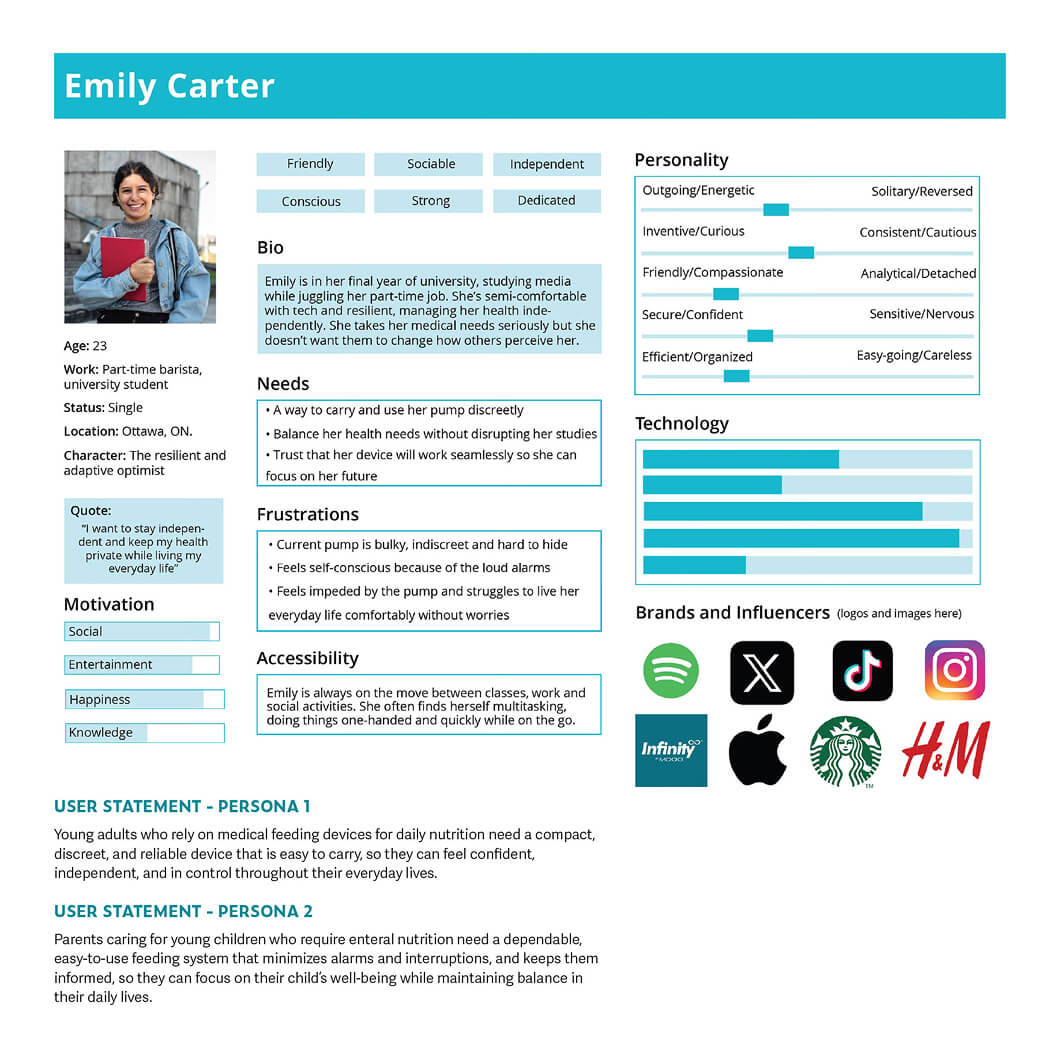
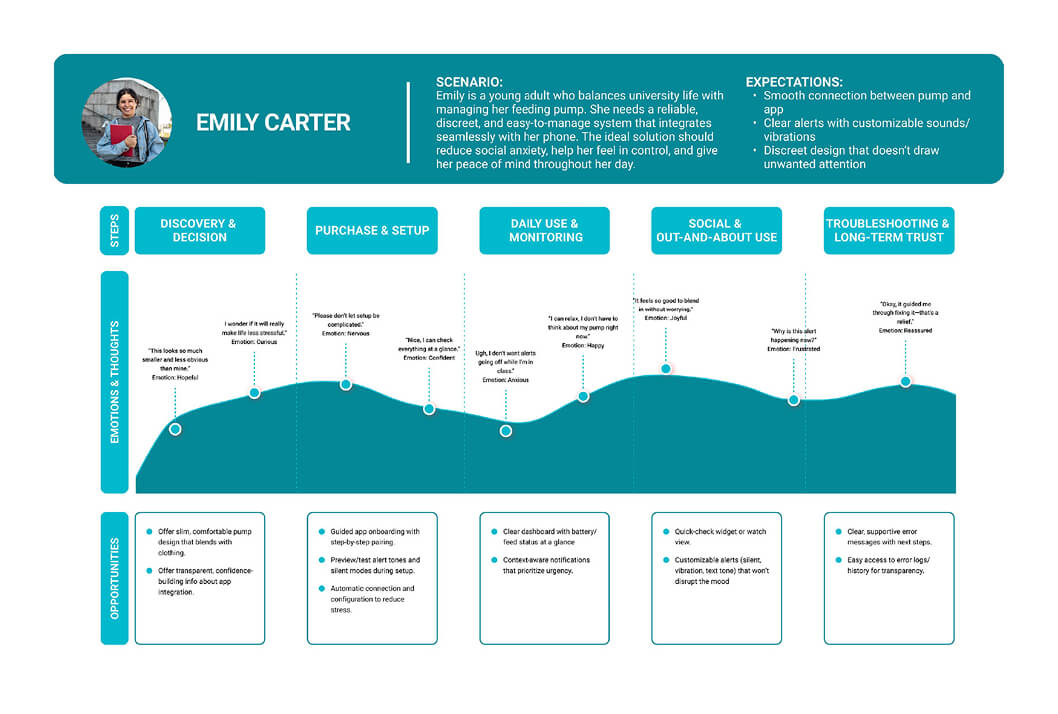
The analysis and ideation phase involved developing user personas to represent primary and secondary users and better understand their needs. A clear tone of voice and visual direction were established through moodboarding to guide the overall experience. Product and user flow diagrams were created to map out app navigation and device interaction. This phase translated research insights into a structured, user-centered framework for both the app and wearable device.
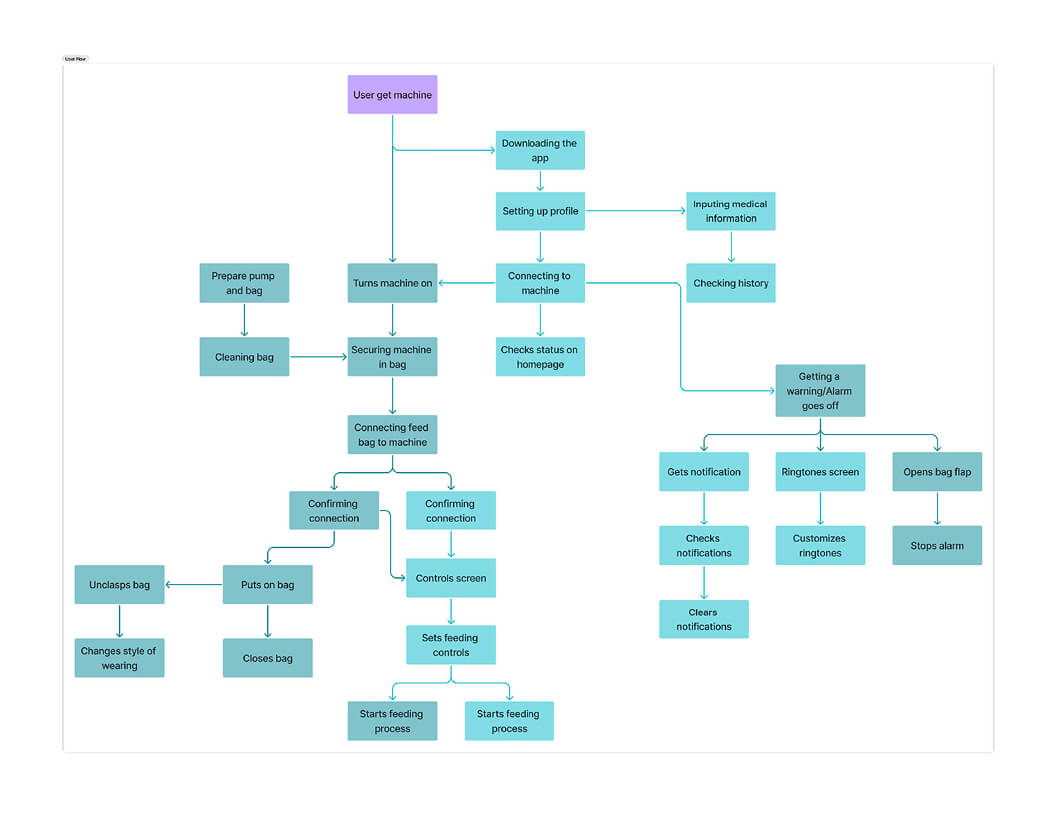
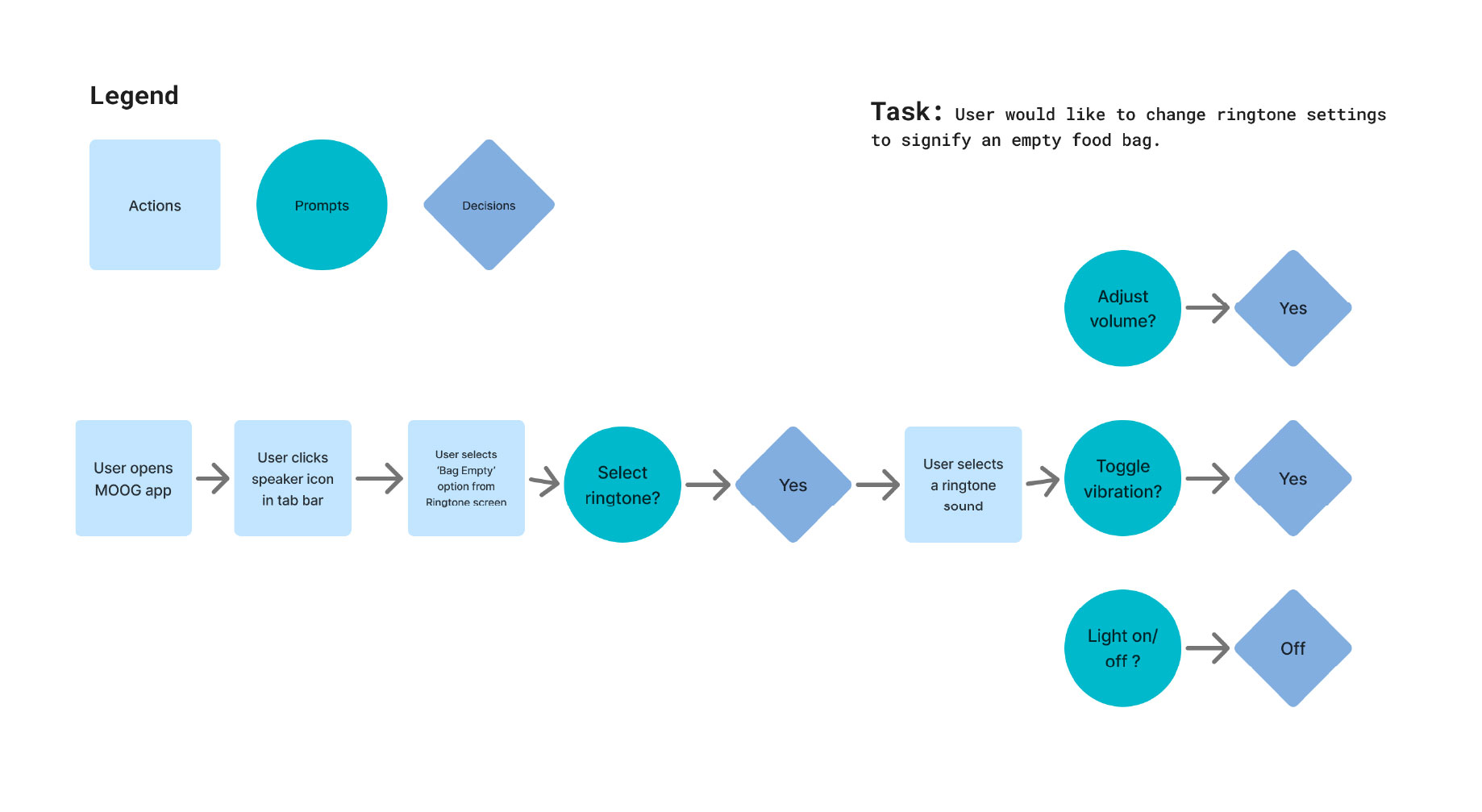
The low-fidelity design phase focused on early app wireframes and product sketches to explore layout, functionality, and interaction between the app and wearable device. These rough concepts allowed for quick experimentation with feeding controls, notifications, and overall navigation. Iteration during this phase helped identify usability challenges and refine how users would manage care with minimal friction.
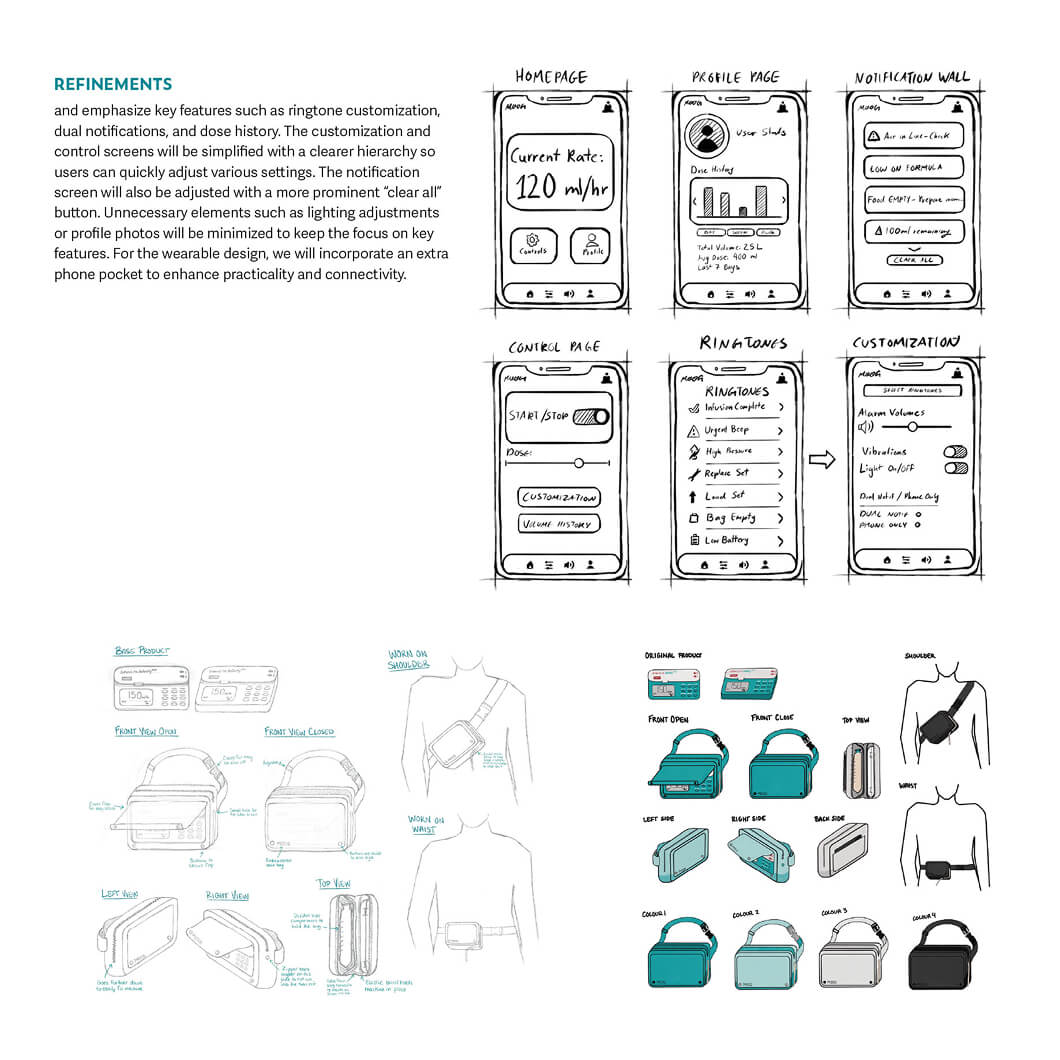
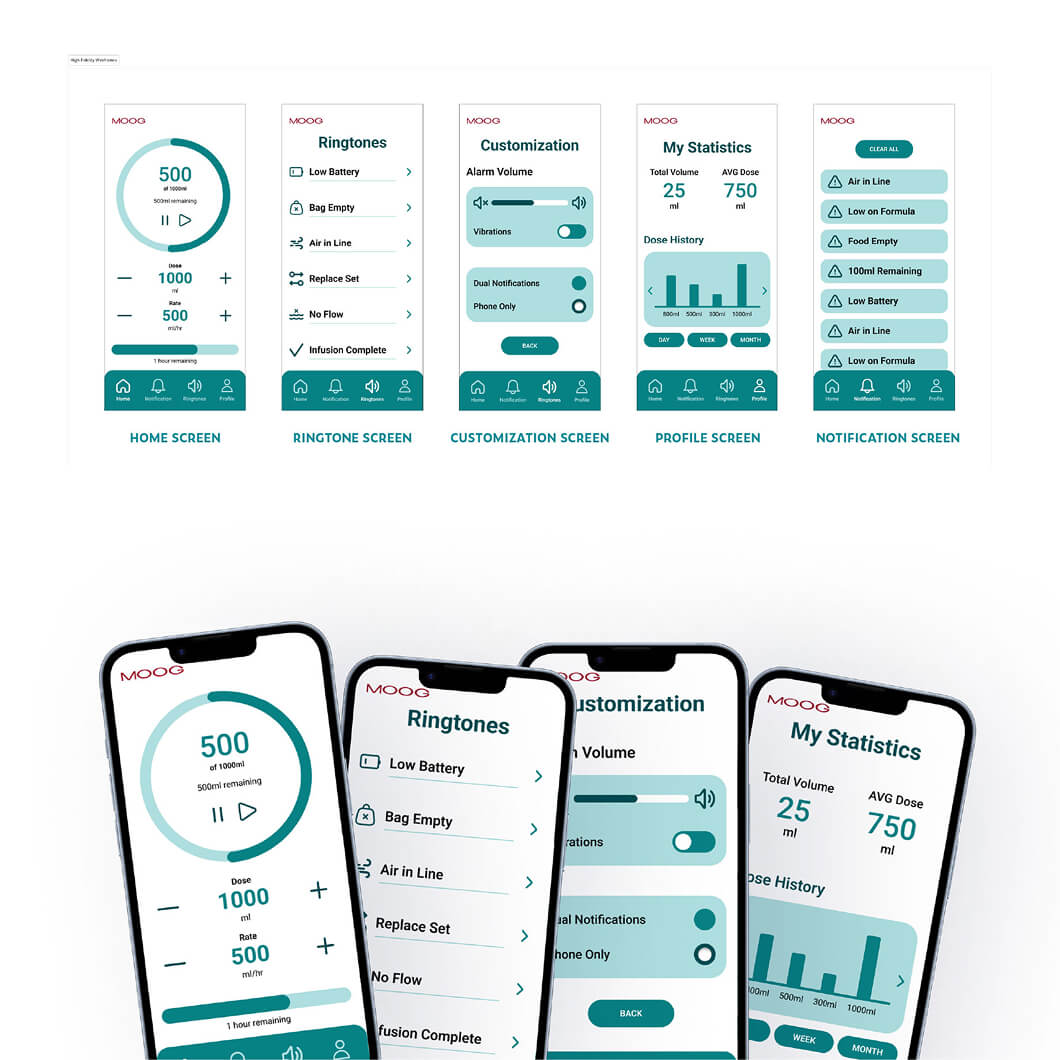
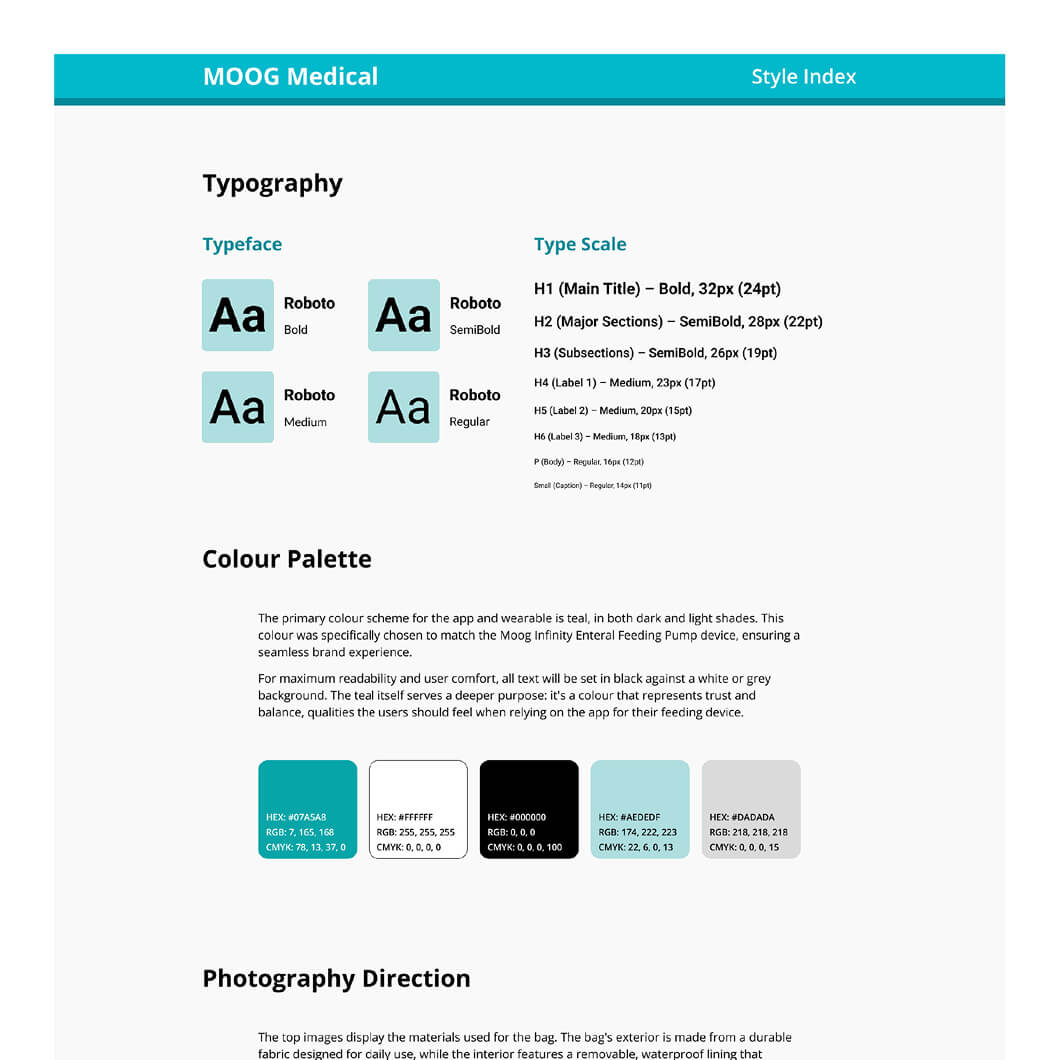
The high-fidelity phase focused on refining the initial wireframes and applying a cohesive style guide to reflect the final look and feel of the app and wearable experience. Visual design, typography, and color were integrated to create realistic, near-final screens. Interactive prototypes were developed to test usability, clarity, and ease of use across key features such as dosage control and notifications.
This project highlighted the importance of designing with both medical accuracy and user dignity in mind. Working across app and wearable touchpoints strengthened skills in simplifying complex health workflows into clear, approachable interfaces. Prototyping and testing reinforced how thoughtful interaction design can improve confidence and ease of use for both users and caregivers. Overall, the project deepened experience in user-centered design and system-based thinking.